 Phật Giáo VNS
Vĩnh Thái Temple
Thanh Hóa
Swipe or use the arrows to browse photos. Tap a photo to view it in full.
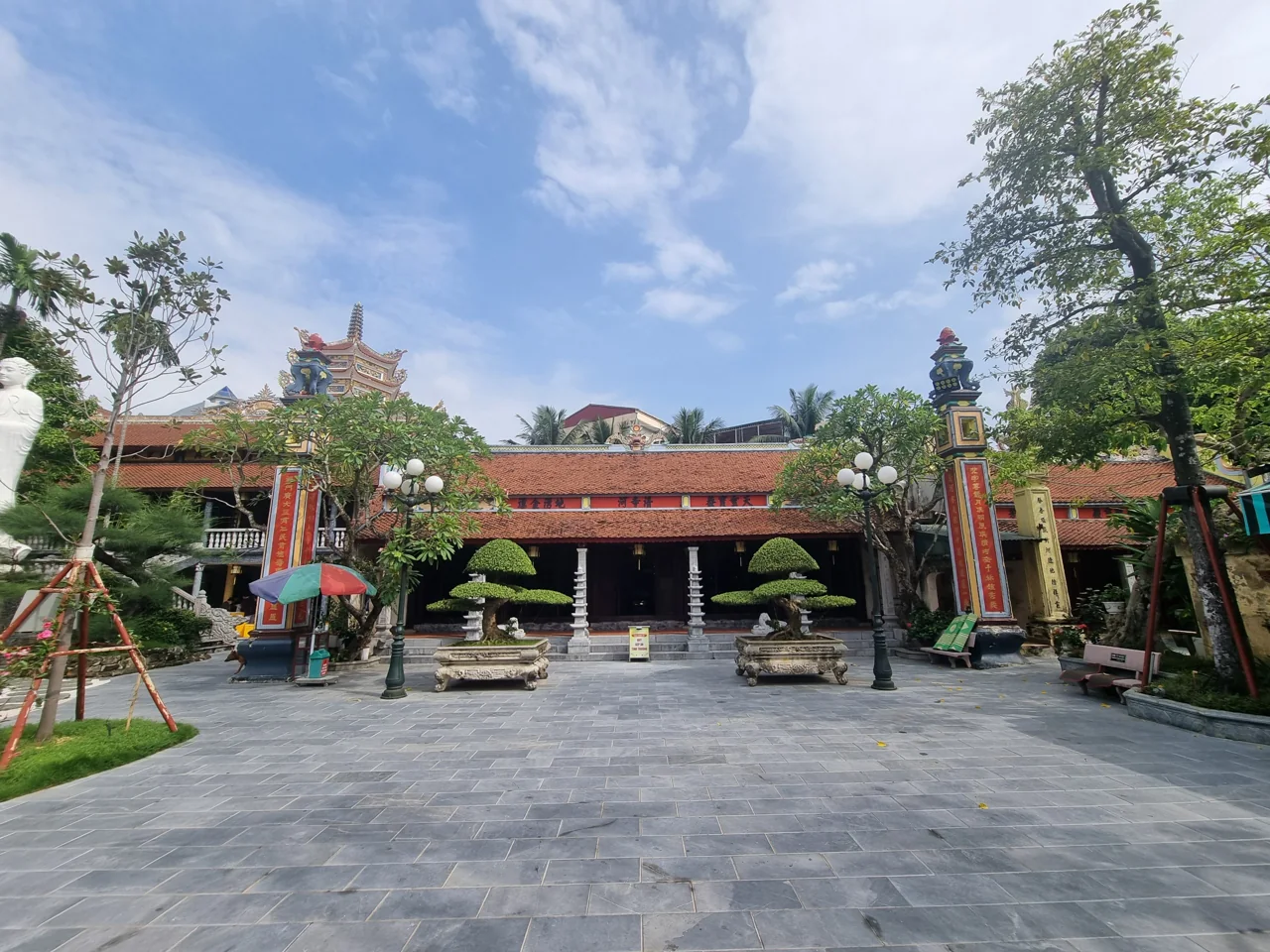
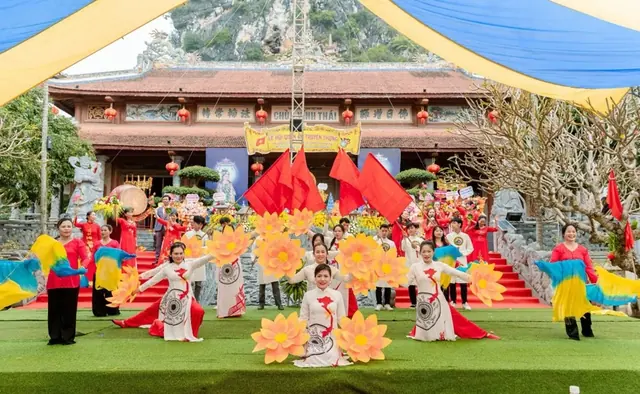
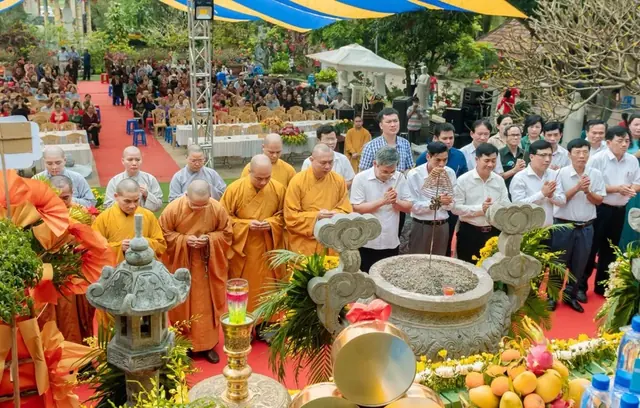
The courtyard of Vĩnh Thái Pagoda during the 2024 Avalokiteśvara festival.
About
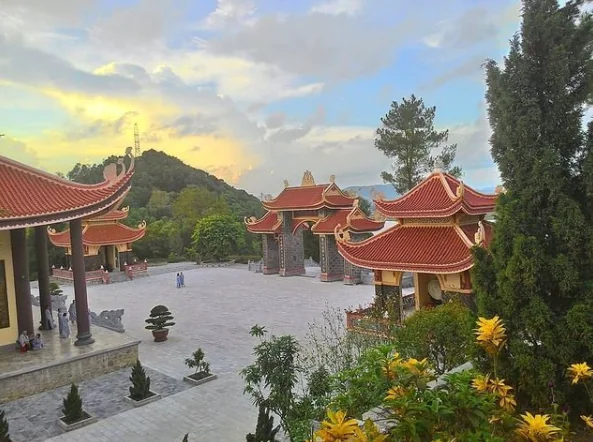
Vĩnh Thái Temple stands below Hoàng Nghiêu Mountain, with rocky mountain scenery, a temple courtyard and shrines restored across different periods. It also preserves memories of revolutionary activity in the Thanh Hóa region.
Visitor information
- Founded
- Local sources date the temple’s beginnings to the late 16th century.
- Visiting hours
- Visiting hours may change with the temple’s practice schedule; please ask the temple before your visit.
- Fees
- No fee has been confirmed by the temple. Please check notices at the site; external services may be charged separately.
- Address
- Dưới chân núi Hoàng Nghiêu, xã Trung Chính, tỉnh Thanh Hóa; khu vực huyện Nông Cống trước đây.
The Trung Chính area can be reached from National Highway 45. The route up the mountain slope has steps, so wear secure footwear. Visitors needing mobility assistance may choose the courtyard and main sanctuary areas according to their health.
Highlights
- A setting at the foot of Hoàng Nghiêu Mountain
- The main sanctuary and carved wooden doors
- Traces of revolutionary activities at the temple
History and origins
Originating in the late 16th century, the temple was relocated and repeatedly rebuilt after natural disasters and wars. During 1939–1941 it was associated with Nguyễn Văn Linh, Tố Hữu and other revolutionary activists. Thanh Hóa newspaper records its designation as a Provincial Historical, Cultural and Revolutionary Relic in 1999.
Architecture & surroundings
The main sanctuary has three central bays and two side bays, a tiled roof and carved wooden doors. Steps lead from the courtyard up the mountain slope to a bodhisattva shrine amid trees and rocks. Statues along the route provide additional stopping points during a visit.
Cultural value
Vĩnh Thái’s significance combines Buddhist community life with local patriotic traditions. Learning about the revolutionary records associated with the temple adds historical depth to a visit.
Events & festivals
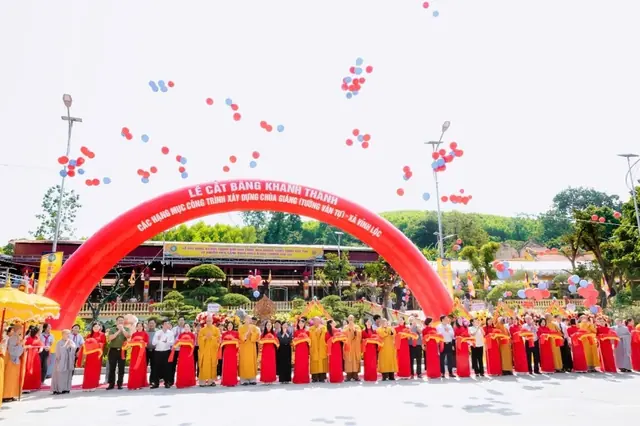
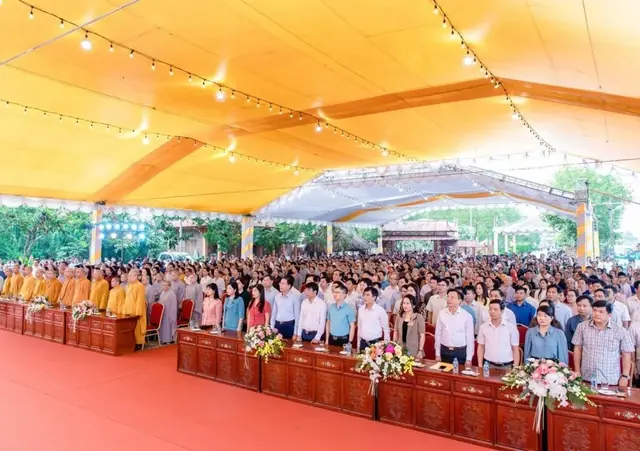
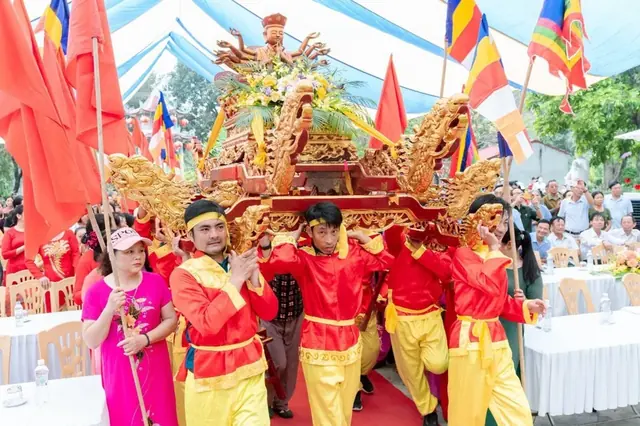
The 2026 Avalokiteśvara festival opened on 5 April, the 18th day of the second lunar month, with incense offerings, a water procession and cultural activities. Please follow temple and local announcements for future years’ dates.
References & photo sources
Information checked: 2026-10-24. Documentary photographs may differ from current conditions.
Photo 1. The courtyard of Vĩnh Thái Pagoda during the 2024 Avalokiteśvara festival.
Vũ Dũng – Hữu Tình – Đức Hòe / Phật Sự Online · Original photo · Reuse with attribution to Phật Sự Online
Resized to a maximum long edge of 640 px and compressed as WebP, preserving the composition and watermark.
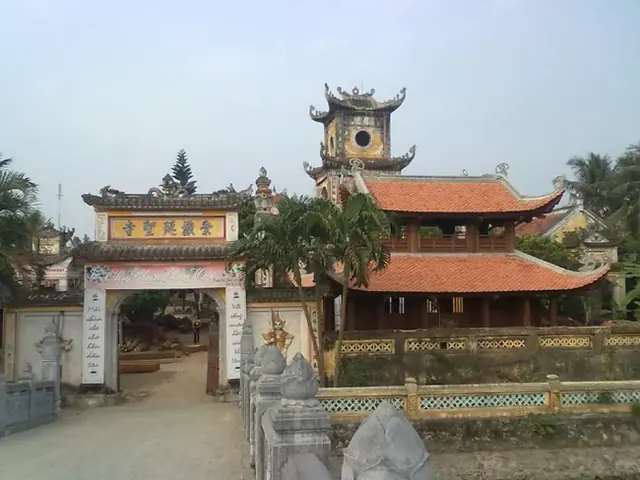
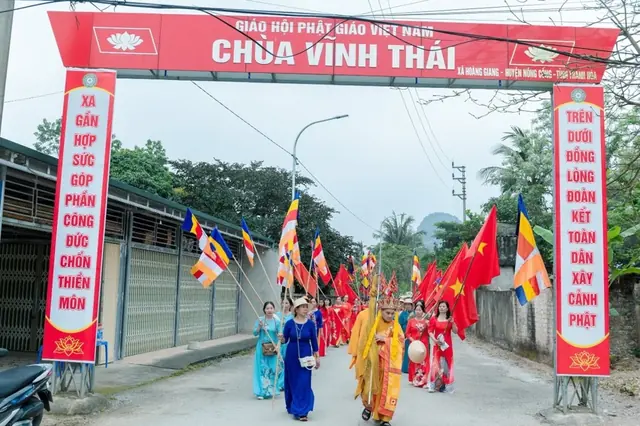
Photo 2. A procession passing through Vĩnh Thái Temple gate during the 2024 festival.
Vũ Dũng – Hữu Tình – Đức Hòe / Phật Sự Online · Original photo · Reuse with attribution to Phật Sự Online
Resized to a maximum long edge of 640 px and compressed as WebP, preserving the composition and watermark.
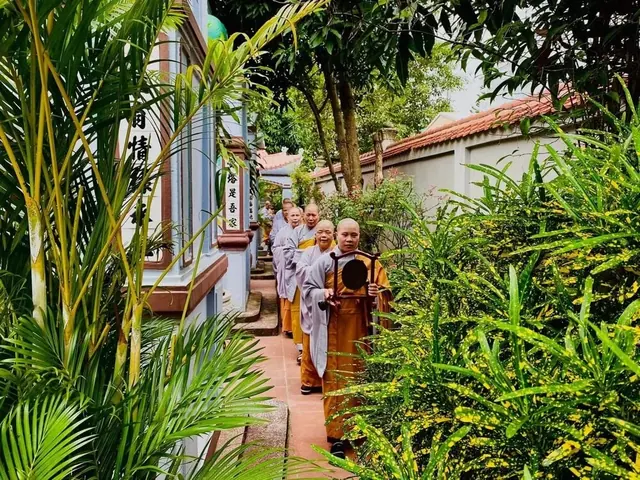
Photo 3. Monastics and Buddhist devotees performing a ceremony at Vĩnh Thái Temple in 2024.
Vũ Dũng – Hữu Tình – Đức Hòe / Phật Sự Online · Original photo · Reuse with attribution to Phật Sự Online
Resized to a maximum long edge of 640 px and compressed as WebP, preserving the composition and watermark.
Photo 4. A processional palanquin at Vĩnh Thái Temple's Avalokiteśvara festival in 2024.
Vũ Dũng – Hữu Tình – Đức Hòe / Phật Sự Online · Original photo · Reuse with attribution to Phật Sự Online
Resized to a maximum long edge of 640 px and compressed as WebP, preserving the composition and watermark.
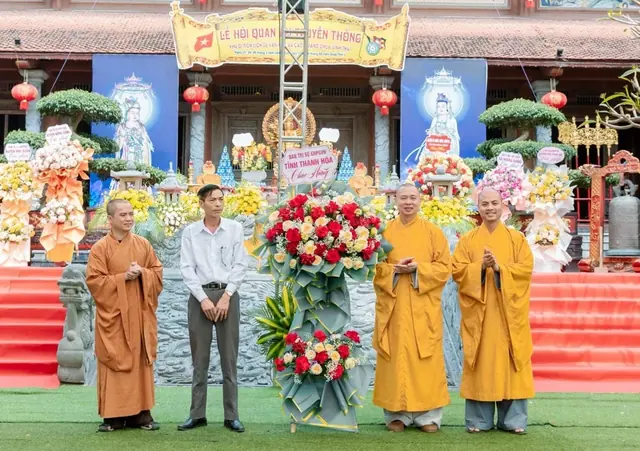
Photo 5. In front of Vĩnh Thái Pagoda’s worship hall during its 2024 festival.
Vũ Dũng – Hữu Tình – Đức Hòe / Phật Sự Online · Original photo · Reuse with attribution to Phật Sự Online
Resized to a maximum long edge of 640 px and compressed as WebP, preserving the composition and watermark.